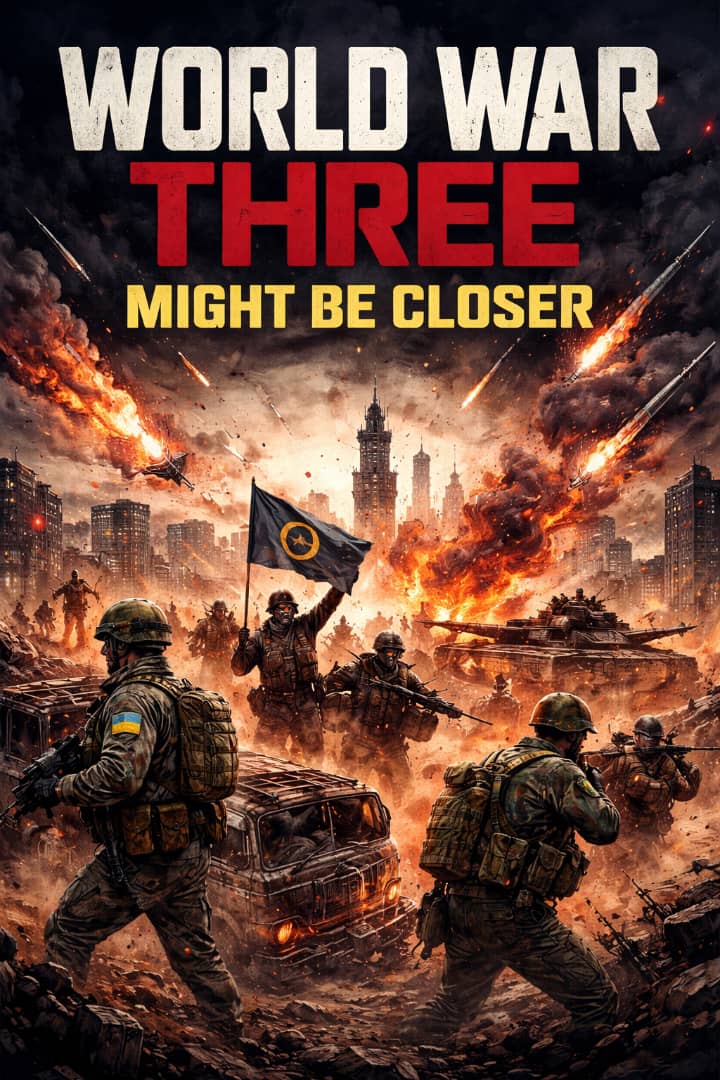
On October 7, 2023, militants from Hamas crossed into southern Israel, killing civilians and taking hostages. Within hours, the Israeli government under Prime Minister Benjamin Netanyahu declared war. Airstrikes began. Reservists were mobilized. A nation that had long lived under the threat of sudden violence found itself in open war once again.
But October 7 did not emerge from a vacuum. For decades, Israel and Iran had engaged in what analysts often described as a "shadow war." Israel targeted Iranian weapons shipments in Syria. Iran funded and armed non-state actors across the region. Cyberattacks, assassinations, and covert operations simmered beneath the surface of official diplomacy. The Middle East was not at peace; it was in managed tension.
After the attacks, Israel's military campaign in Gaza intensified. Entire neighborhoods were reduced to rubble. Civilian casualties mounted, and humanitarian conditions deteriorated rapidly. International protests spread across Europe, North America, and the Middle East. In Washington, President Joe Biden reaffirmed U.S. support for Israel's right to defend itself, while urging adherence to international humanitarian law. American aircraft carriers were positioned in the eastern Mediterranean — a visible signal of deterrence.
Then the perimeter began to expand.
To Israel's north, Hezbollah increased cross-border exchanges of fire from Lebanon. In Yemen, the Houthis began targeting commercial shipping in the Red Sea, disrupting one of the world's most critical trade arteries. Militias in Iraq and Syria launched strikes against U.S. bases. Each front operated with its own local logic, yet all were connected by a broader axis of alignment with Tehran.
Iran denied direct operational control over the October 7 attack, but praised the strike as a blow against Israel. For years, Iran had cultivated what it calls the "Axis of Resistance" — a network of allied groups designed to project influence and pressure adversaries without triggering direct conventional war. This strategy allowed Tehran to exert regional leverage while maintaining plausible deniability.
By early 2024, the language surrounding the conflict shifted. Commentators began invoking the phrase "World War III." The term was dramatic, even sensational, but it reflected something real: the international system already appeared strained. Russia's war in Ukraine had fractured European security. U.S.–China rivalry was intensifying. Global supply chains were fragile. Energy markets were sensitive to disruption.
Then came the moment that broke precedent.
In April 2024, after an Israeli strike in Damascus killed senior Iranian commanders, Iran launched an unprecedented direct barrage of drones and missiles toward Israeli territory. For the first time, Iran and Israel exchanged overt, state-to-state fire at scale. Most of the incoming projectiles were intercepted with assistance from the United States and regional partners, but the symbolism was unmistakable. The shadow war had stepped into daylight.
Israel responded with a limited strike inside Iran. The retaliation was calibrated — strong enough to signal capability, restrained enough to avoid immediate full-scale escalation. Diplomacy worked urgently behind the scenes. Washington's objective was containment. Tehran's objective appeared to be deterrence without catastrophic retaliation. Jerusalem's objective was restoration of credibility.
The world watched closely, aware that miscalculation — not intent — often ignites global wars.
The Architecture of Escalation
The danger of the U.S.–Israel–Iran triangle lies not in a single dramatic decision, but in cumulative pressure. Proxy conflicts multiply the number of actors capable of triggering escalation. Maritime trade disruptions impact global economies. Cyber operations blur the line between civilian and military infrastructure. In a nuclear-armed world, deterrence remains stable — until it fails.
Unlike the rigid bipolar structure of the Cold War, today's international system is multipolar and networked. Regional conflicts reverberate instantly through financial markets, information ecosystems, and alliance commitments. Escalation is no longer linear. It is systemic.
And yet, despite the rhetoric, the situation has remained contained. There has been no formal declaration of war between the United States and Iran. Israel and Iran have avoided sustained direct exchanges. Regional actors signal aggressively, but calibrate carefully. The threshold of global war has not been crossed.
This restraint is not accidental. It reflects the sobering memory of the twentieth century.
The Myth of Cleansing War
After World War I, many believed humanity had learned its lesson. The devastation was so profound that leaders declared it "the war to end all wars." Twenty years later, World War II shattered that hope. Tens of millions perished. Cities burned. The Holocaust industrialized genocide. Nuclear weapons introduced the possibility of planetary destruction.
And yet, from the ruins emerged institutions — the United Nations, expanded international law, security alliances — designed to prevent recurrence. This has led some thinkers to argue that catastrophe produces necessary transformation; that systemic change requires rupture.
But this interpretation mistakes consequence for purpose.
War does not purify. It destroys. Institutions built after 1945 were not the gift of war, but the response to trauma. They were attempts to prevent repetition, not celebrations of destruction.
The notion that a global war "needs" to happen in order to reset the world ignores a central truth: progress born of devastation carries moral costs that cannot be abstracted into theory. The dead do not benefit from institutional reform. The displaced do not experience geopolitical renewal as progress.
History shows that change often follows crisis. It does not show that crisis is therefore desirable.
Where We Stand
The confrontation among the United States, Israel, and Iran remains volatile but bounded. Proxy dynamics continue. Maritime security remains fragile. Diplomatic channels remain active, even when invisible. The phrase "World War III" circulates in headlines, but global war has not materialized.
The system is stressed, not collapsed.
The deeper question is not whether war is inevitable, but whether humanity can evolve its institutions without first destroying them. The twentieth century demonstrated both our capacity for annihilation and our capacity for reconstruction. The twenty-first century will test whether reconstruction must always follow ruin.
Perhaps the real intellectual task is not to justify catastrophe as cleansing, but to understand why societies drift toward the edge — and how they might step back before falling.
The abyss is visible. The choice, for now, remains open.
References
- U.S. Department of Defense. (2023–2024). Statements and press briefings on U.S. military posture in the Eastern Mediterranean and Red Sea.
- The White House. (2023–2024). Remarks by President Joe Biden on Israel, Iran, and regional security developments.
- Israeli Government Press Office. (2023–2024). Official statements following the October 7, 2023 attacks and subsequent military operations in Gaza.
- United Nations Security Council. (2023–2024). Emergency meeting records and resolutions regarding the Israel–Gaza conflict.
- International Crisis Group. (2023–2024). Reports on Israel–Hamas war escalation risks and Iran's regional strategy.
- U.S. Congressional Research Service. (2024). Iran's Regional Strategy and U.S. Policy.
- Council on Foreign Relations. (2023–2024). Backgrounders on Hezbollah, Hamas, and Iran's "Axis of Resistance."
- BBC News. (October 7, 2023 and onward). Timeline coverage of the Hamas attack on Israel and subsequent regional developments.
- Al Jazeera English. (2023–2024). Reporting on Red Sea shipping disruptions and Houthi involvement.
- The New York Times. (2024). Coverage of Iran's April 2024 drone and missile strike on Israel and Israel's retaliatory actions.
- United Nations Conference on Trade and Development (UNCTAD). (2024). Reports on Red Sea trade disruptions and global shipping impacts.
- Gaddis, John Lewis. (2005). The Cold War: A New History. Penguin Press.
- Keegan, John. (1998). The First World War. Vintage Books.
- Kershaw, Ian. (2015). To Hell and Back: Europe 1914–1949. Penguin Books.
- Waltz, Kenneth. (1979). Theory of International Politics. McGraw-Hill.
- Mearsheimer, John J. (2001). The Tragedy of Great Power Politics. W.W. Norton.
- United Nations Charter. (1945). Foundational framework for post–World War II international order.